
Home / Pest Library / Crickets
Crickets in Delaware: How to Spot Them and Get Rid of Them
Chirping in the house or jumping bugs in the basement? Learn the difference between house and camel crickets and how Wolfe Pest Control helps keep them out.
Quick facts
- House crickets chirp. Camel crickets are silent.
- Camel crickets love damp basements and crawl spaces and can breed indoors.
- Crickets can chew fabric, but damage is usually minor.
- Fixing moisture and sealing gaps does most of the work.
What they look likeSignsAre they dangerous?How we treat themPreventionFAQ
What do they look like?
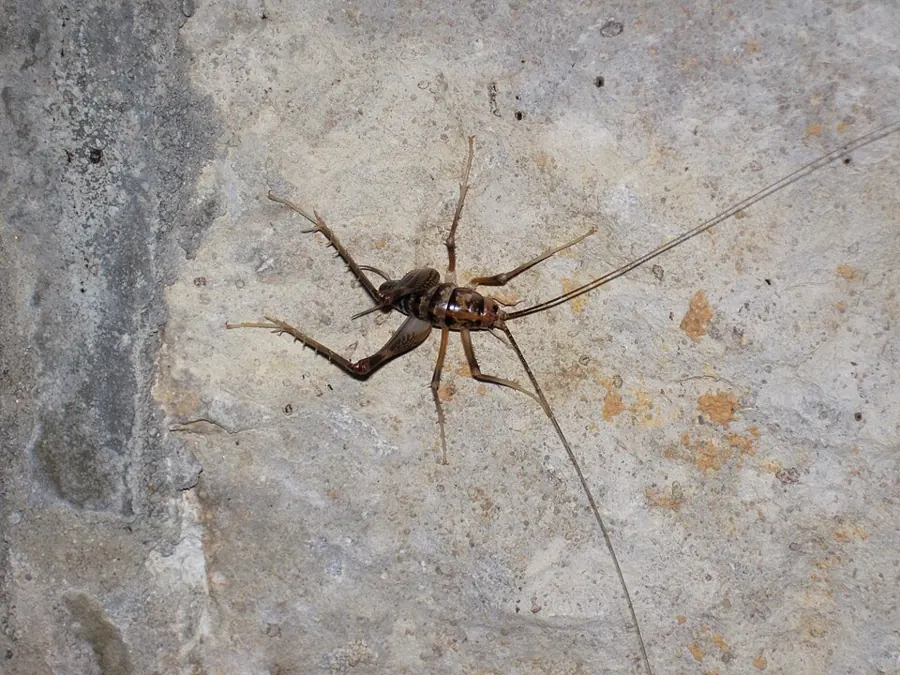
House crickets are about 3/4 inch long (19 to 22 mm) and light yellowish-brown, with three dark bands across the head. They like warmth, they're drawn to light, and they chirp. Camel crickets look humped, with extremely long antennae and back legs. They're light tan to dark brown and about 1/2 inch to 1 1/4 inches long (13 to 33 mm). Camel crickets don't chirp, and they live in damp, dark basements and crawl spaces.
Signs you have them
- Chirping inside the house (house crickets)
- Humped, long-legged crickets in a damp basement or crawl space
- Crickets gathering near lights
- Small holes chewed in clothing or fabric
Are they dangerous?
Crickets are mostly a nuisance. They can chew wool, silk, cotton, linen, nylon, fur, and rubber, especially fabric that's soiled. UMD Extension says damage stays minor unless dozens are around. Camel crickets may reproduce indoors, so a damp basement can keep making more of them.
How Wolfe treats them
Crickets are a moisture and entry-point problem as much as a bug problem. We treat the outside perimeter and the damp areas where they hide, like basements and crawl spaces, and we can set sticky traps to catch strays. We'll show you the gaps to seal and the moisture to fix. All of our work comes with a 30-day warranty. If pests come back within 30 days of a treatment, call us and we'll come back out at no extra charge.
How to keep them out
- Fix leaks and run a dehumidifier in damp basements.
- Seal gaps around doors, windows, vents, and utility lines.
- Keep leaves, lumber, and firewood away from the foundation.
- Trim groundcover 18 inches back from the house.
- Switch outdoor lights to yellow bug lights.
Common questions
What's the difference between house and camel crickets?
House crickets are yellowish-brown and chirp. Camel crickets are humped, have very long legs and antennae, stay silent, and live in damp basements and crawl spaces.
Why are camel crickets in my basement?
They like damp, dark spaces. Fixing leaks and drying the area out makes your basement much less inviting.
Do crickets damage anything?
They can chew fabric, especially soiled clothing. UMD Extension says damage is minor unless there are dozens.
What can I do right now?
Vacuum them up. UMD Extension calls vacuuming one of the most effective ways to deal with crickets indoors.
Sources: University of Maryland Extension: Crickets
Last reviewed October 2026 by Wolfe Pest Control.
Seeing something? Call us.
(302) 697-8969Office hours: Monday to Friday, 10am to 3pm
All contact details