
Home / Pest Library / Mice
Mice in Delaware: How to Spot Them and Get Rid of Them
Droppings in the drawers or scratching in the walls? Learn the signs of house mice, the diseases rodents spread, and how Wolfe Pest Control seals them out.
Quick facts
- A mouse can fit through a hole the width of a pencil.
- Pointed droppings in cabinets and drawers are the classic sign.
- The CDC lists several diseases rodents spread directly.
- Sealing entry points matters as much as trapping.
What they look likeSignsAre they dangerous?How we treat themPreventionFAQ
What do they look like?
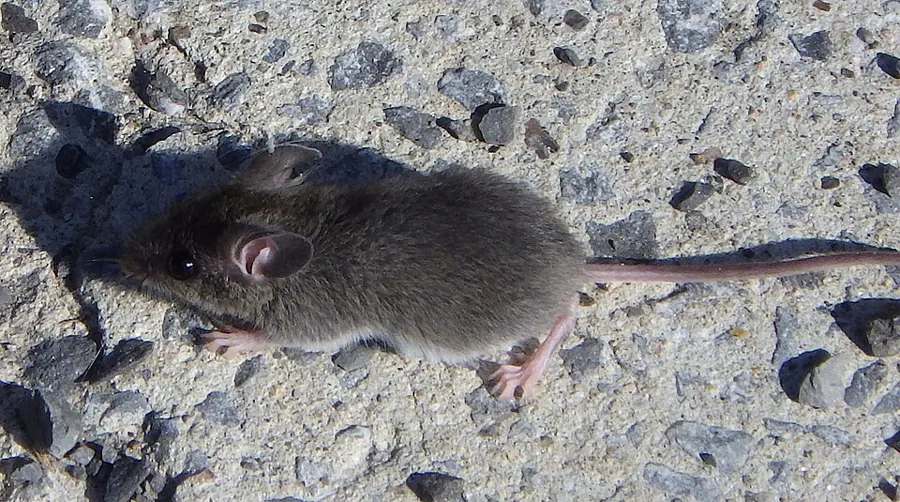
House mice are small and dusty gray with a cream-colored belly. Their bodies run 2 1/2 to 3 3/4 inches long, with a tail about 2 3/4 to 4 inches long. They breed fast. A female can have about a half dozen babies every three weeks, up to 35 young a year. The CDC says a mouse can squeeze through a hole the width of a pencil, about 1/4 inch.
Signs you have them
- Pointed droppings, 1/8 to 1/4 inch long, in cabinets and drawers
- Gnaw marks on food packages, wood, or wiring
- Oily rub marks along walls and baseboards
- Nests of shredded paper, insulation, or fabric
- A strong urine smell in heavy infestations
Are they dangerous?
Mice are more than a nuisance. The CDC lists hantavirus, leptospirosis, salmonellosis, lymphocytic choriomeningitis, and rat-bite fever as diseases rodents spread directly, through contaminated air, contaminated surfaces, or bites and scratches. Mouse urine and droppings can also trigger allergies and asthma, and mice can bring fleas and mites inside.
How Wolfe treats them
We follow the same approach the CDC uses: seal up, trap up, clean up. First we find how mice are getting in, checking around pipes, vents, eaves, and the gap at the foundation. Then we set traps where they're active, and our rodent exclusion service seals the openings. All of our work comes with a 30-day warranty. If pests come back within 30 days of a treatment, call us and we'll come back out at no extra charge.
How to keep them out
- Fill small holes with steel wool plus caulk or spray foam.
- Check under sinks, behind appliances, and around pipes to the water heater and furnace.
- Store food in glass or metal containers.
- Cut down on clutter where mice can nest.
Common questions
How small a hole can a mouse get through?
The CDC says a hole the width of a pencil, about 1/4 inch. That's why sealing entry points matters as much as trapping.
How do I know if mice are still active?
Clean up the droppings in an area and check again later. The CDC says if new droppings show up, mice are still active.
Do you seal up entry points?
Yes. Rodent exclusion, sealing the gaps mice use to get in, is one of our services.
Sources: CDC: Rodent Control; CDC: How to Seal Up; PestWorld (NPMA): House Mice
Last reviewed October 2026 by Wolfe Pest Control.
Seeing something? Call us.
(302) 697-8969Office hours: Monday to Friday, 10am to 3pm
All contact details