
Home / Pest Library / Yellowjackets
Yellowjackets in Delaware: How to Spot Them and Get Rid of Them
Wasps going in and out of a hole in the yard? Learn how to spot a yellowjacket nest, why late summer is the worst, and how Wolfe Pest Control treats the nest.
Quick facts
- Yellowjackets usually nest underground in lawns or at the base of shrubs.
- By fall a colony can hold 600 to 800 workers.
- Never pour gasoline into a nest.
- Old nests aren't reused the next year.
What they look likeSignsAre they dangerous?How we treat themPreventionFAQ
What do they look like?
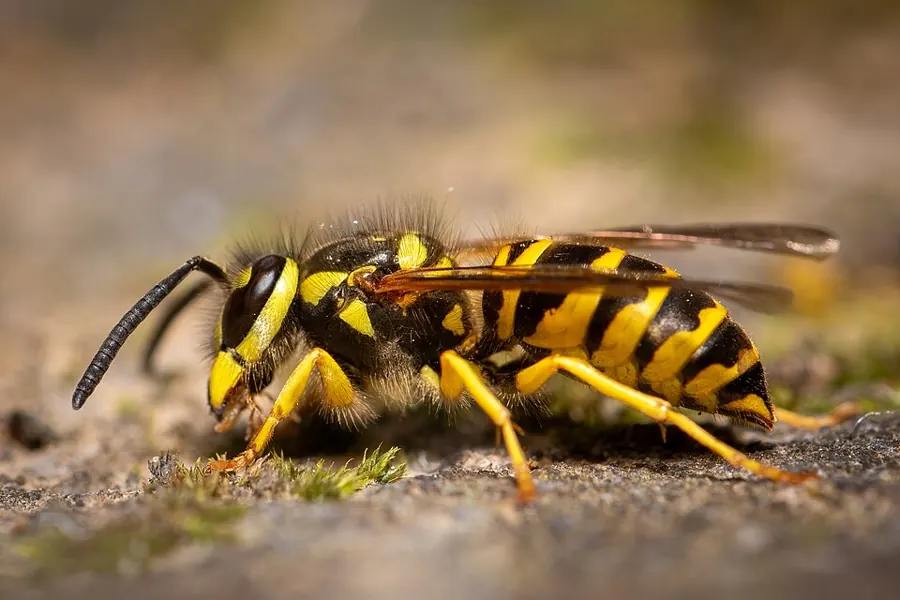
Yellowjackets are about the size of a housefly, with sharp yellow and black markings. They live in colonies, usually in underground holes in lawns or at the base of shrubs. Sometimes they build in attics, walls, or sheds. The nest itself is tan paper, but with a ground nest you may only see the opening. If you see wasps flying in and out of a hole in the yard, think yellowjackets.
Signs you have them
- Wasps flying in and out of a hole in the lawn or under a shrub
- Wasps around trash cans, picnics, and hummingbird feeders late in the season
- Wasps coming and going from a gap in a wall, attic, or shed
Are they dangerous?
Yellowjackets mostly sting to defend the nest, like when someone steps on a ground nest. By fall a single colony can hold 600 to 800 workers, so a disturbed nest can mean a lot of stings. For anyone with a sting allergy, a nest near the house is worth taking care of. Late in the season they also crowd picnics, trash cans, and drinks.
When are they active?
A single queen starts each nest in spring, the colony is biggest in late summer and fall, and the nest is abandoned by winter.
How Wolfe treats them
We treat yellowjacket nests at dusk, when most of the colony is home, applying product into the nest opening. Nests inside walls or other hard-to-reach spots are a job for a pro, and we handle those too. Please don't pour gasoline into a nest. NC State Extension calls it extremely hazardous. All of our work comes with a 30-day warranty. If pests come back within 30 days of a treatment, call us and we'll come back out at no extra charge.
How to keep them out
- Cover food and drinks when you eat outside.
- Drink from cups instead of cans outdoors.
- Keep trash cans covered.
- Don't count on store-bought traps. NC State Extension says they haven't been shown to reduce yellowjacket problems.
Common questions
Should I pour gasoline in the hole?
No. NC State Extension calls it extremely hazardous and environmentally unsound. Call us instead.
Do yellowjacket traps work?
NC State Extension says traps haven't been shown to reduce yellowjacket problems.
Will they come back to the same nest next year?
No. Nests are abandoned by winter and aren't reused. Only new queens survive the winter, and they start fresh nests in spring.
Why are they so bad in late summer?
That's when colonies are at their biggest. NC State Extension notes they become late-season pests at picnics and trash cans.
Sources: NC State Extension: Controlling Bald-Faced Hornets and Yellow Jackets
Last reviewed October 2026 by Wolfe Pest Control.
Seeing something? Call us.
(302) 697-8969Office hours: Monday to Friday, 10am to 3pm
All contact details