
Home / Pest Library / Termites
Termites in Delaware: How to Spot Them and Get Rid of Them
Winged bugs or mud tubes? Learn how to spot eastern subterranean termites, tell them from flying ants, and how Wolfe Pest Control inspects and treats them.
Quick facts
- Shed wings and mud tubes are the most common signs.
- Termites have a broad waist, straight antennae, and equal wings. Flying ants don't.
- Damage builds slowly over years, out of sight.
- A large colony can eat dozens of pounds of wood a year.
- The VA requires wood-destroying insect information for homes across Delaware.
What they look likeSignsAre they dangerous?How we treat themPreventionFAQ
What do they look like?
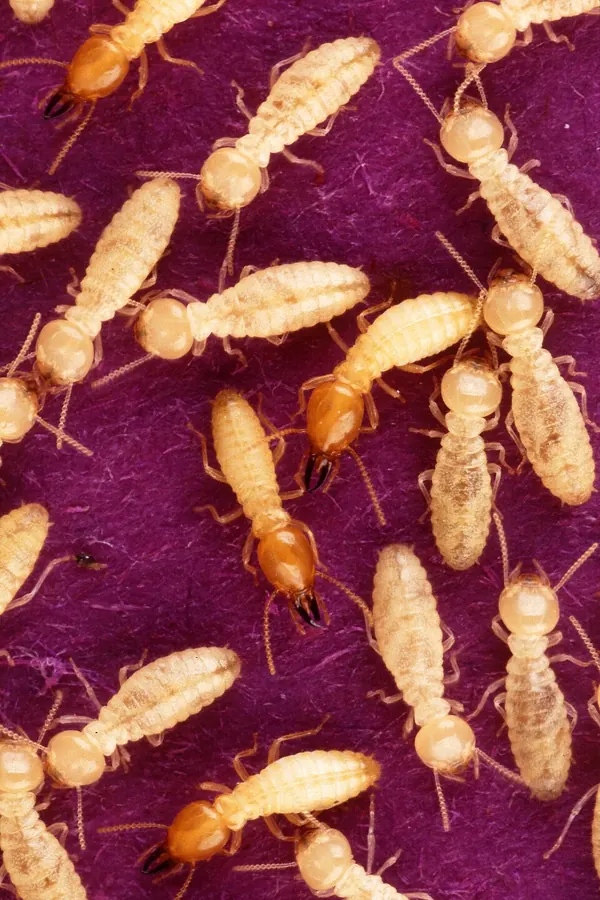
Most people first notice the swarmers. Eastern subterranean termite swarmers are black or dark brown, 3/8 to 1/2 inch long, with two pairs of see-through wings that are the same length. They shed those wings quickly. The workers, which do the damage, are creamy white. Soldiers have yellowish heads with large jaws. To tell a termite from a flying ant, check the waist, antennae, and wings. Termites have a broad waist, straight antennae, and equal wings. Ants have a pinched waist, elbowed antennae, and unequal wings.
Signs you have them
- Winged swarmers gathering at doors and windows
- Piles of shed wings on sills or floors
- Earth-colored mud tubes, usually under 1/4 inch wide, on the foundation, posts, sills, or trim
- Wood that's hollowed out or sounds hollow
Are they dangerous?
Termite damage builds slowly over years, out of sight. Shed wings are often the only thing you'll see, so a swarm inside is worth a call even if it stops on its own. A colony can hold 100,000 to 1,000,000 termites, and they can travel up to 150 feet from the nest to find food. A large termite colony can eat dozens of pounds of wood a year. One University of Florida lab study works out to about 80 pounds a year for a colony of a million termites. That study used Formosan termites, a southern species. Delaware's eastern subterranean termites are similar but not identical. Homeowners insurance usually doesn't cover termite damage. Check your policy. If you're buying or selling a home, termites matter there too. The VA requires wood-destroying insect information for VA loans across Delaware, and lenders often ask for it on other loans.
When are they active?
Penn State Extension reports swarms from February to June next door in Pennsylvania.
How Wolfe treats them
We start with an inspection, looking for mud tubes, damage, and conditions that draw termites in. If termites are active, we use a liquid soil treatment. We apply termiticide to the soil around the foundation by trenching, rodding, or drilling through concrete. Our termite treatments come with a 1-year termite warranty. After the first year, you can keep it active with a yearly inspection and renewal fee. If you sell the house, the termite warranty transfers to the new owner. We also do WDI termite letters for home sales. Call us at (302) 697-8969 to schedule a termite inspection. It's $150, and we waive it if we do your treatment.
How to keep them out
- Move firewood and wood debris away from the house.
- Keep wood at least 18 inches off the soil, and use pressure-treated wood where it touches soil.
- Keep gutters working and water draining away from the house.
- Fill cracks in the foundation.
- Get a termite inspection once a year.
Common questions
How do I tell a termite from a flying ant?
Check the waist, antennae, and wings. Termites have a broad waist, straight antennae, and two pairs of equal wings. Ants have a pinched waist, elbowed antennae, and unequal wings.
Do I need a termite letter to sell my house?
If the buyer is using a VA loan, yes. The VA requires wood-destroying insect information for the entire state of Delaware, and lenders often require it for other loans too.
Can I treat termites myself?
Penn State Extension advises against DIY termite treatment. Call us for an inspection, and we'll talk through what your home needs.
I found wings on my windowsill. What now?
Shed wings are often the only sign of termites you'll see. Save a few in a bag and call us to set up an inspection.
Does insurance cover termite damage?
Homeowners insurance usually doesn't cover termite damage. Check your policy.
Sources: Penn State Extension: Eastern Subterranean Termites; UF/IFAS Featured Creatures: Eastern Subterranean Termite (EENY-212); Professional Pest Manager: Termite Appetite, an Indication of Colony Size?; Purdue Extension: Subterranean Termites (E-4); NPMA: Spring Is Prime Termite Season; VA Home Loans: Local Requirements
Last reviewed October 2026 by Wolfe Pest Control.
Seeing something? Call us.
(302) 697-8969Office hours: Monday to Friday, 10am to 3pm
All contact details